



























The Future of Artificial Intelligence: New Possibilities for a New Era
Artificial Intelligence (AI) has rapidly become one of the most transformative technologies of our time.


Artificial Intelligence (AI) has rapidly become one of the most transformative technologies of our time. Once confined to science fiction, AI is now an integral part of our world, reshaping how we live, work, and interact. As we continue to explore the vast potential of AI, it’s clear that its future holds even greater promise. This article examines the future of AI, its potential growth, and the profound impact it will have on society.
1. Technological Growth of Artificial Intelligence: Enhanced Information Processing
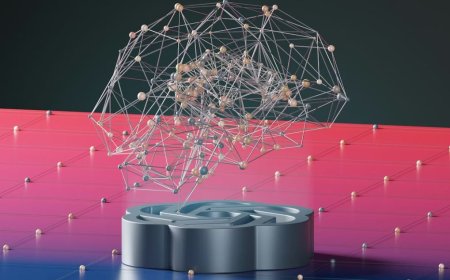
Today, AI systems are capable of processing vast amounts of data and solving increasingly complex problems. However, in the future, this technology will continue to evolve, taking even larger leaps in its capabilities. For example, current neural networks and machine learning algorithms allow AI to process large datasets. But in the future, AI will achieve the following milestones:
- Continuous Learning and Adaptation: AI systems will learn from their experiences and adapt to new environments quickly. This will allow AI to take on more complex tasks, solving problems that human intelligence cannot handle in real-time.
- Solving Complex Issues: In the future, AI will not only solve simple tasks but will tackle complex and abstract problems. From climate modeling to scientific discoveries, AI will bring new approaches to address global challenges.
2. The Role of Humans in the Age of AI
As AI advances, one crucial question arises: “What role will humans play?” While AI has the potential to automate many tasks, it will not replace human involvement entirely. Instead, the future of AI will be one of collaboration between humans and machines.
- Human-AI Collaboration: AI will not replace humans but will complement human abilities. For instance, in healthcare, AI can assist doctors in diagnosing diseases faster and more accurately, but it will still require human oversight and judgment. This collaboration will lead to the creation of new industries and professional fields.
- Human Creativity and Emotion: While AI can automate technical tasks, human creativity and emotional intelligence will remain essential in areas like the arts, music, and other forms of expression. AI cannot replicate the intuition, emotional depth, and subjective experience that humans bring to these fields.
3. The Economic Impact of Artificial Intelligence
AI’s evolution will have a significant impact on the global economy. As AI continues to develop, it will both disrupt and create new job markets. While automation will inevitably reduce certain types of jobs, it will also create opportunities in new sectors.
- Creation of New Job Markets: The rise of AI technologies will create demand for skilled professionals who can build, manage, and improve these systems. Roles like AI developers, data scientists, and ethical researchers will become increasingly important.
- Transformation of the Workforce: Rather than eliminating jobs, AI will transform existing roles, making workers more productive. Human workers will focus on higher-level tasks, while machines handle routine, repetitive processes. This shift will require upskilling and continuous learning in the workforce.
4. Artificial Intelligence and Social Improvement
AI holds great potential in addressing social issues and improving the quality of life for all people. In areas like justice, education, and healthcare, AI will offer new solutions that were previously unimaginable.
- Justice and Fairness: AI systems can make more objective and transparent decisions than humans, reducing bias and discrimination. In sectors like hiring, law enforcement, and judicial systems, AI can help promote fairness and equality.
- Improving Healthcare and Education: In healthcare, AI-powered diagnostics, personalized treatment plans, and predictive analytics will enhance the efficiency and effectiveness of medical care. In education, AI will create personalized learning experiences, ensuring students receive tailored instruction based on their individual needs.
5. Ethics and Safety of Artificial Intelligence
As AI continues to evolve, ethical considerations and safety concerns are becoming more critical. The rapid pace of AI development raises questions about its potential misuse, privacy concerns, and the risks of losing control over these technologies.
- Ethics in Algorithms: AI must be developed with transparency, fairness, and accountability. Ensuring that AI systems respect human rights and are free from bias will be essential to maintaining public trust and confidence in these technologies.
- AI Safety: As AI becomes more autonomous, ensuring its safety will be paramount. Issues like security, privacy, and accountability need to be addressed to prevent harmful applications, such as surveillance or cyber-attacks, and ensure that AI is used for the greater good.
6. The Bright Future of Artificial Intelligence
The future of AI is full of exciting possibilities. It will continue to revolutionize industries, solve complex problems, and enhance human life. As we move forward, it is crucial that we ensure AI is developed ethically and responsibly, so its benefits are maximized for society.
The potential of AI goes beyond simply automating tasks—it holds the promise of reshaping the very fabric of society. By working together, humans and machines will be able to solve global challenges, create new opportunities, and build a better, more efficient future for all.